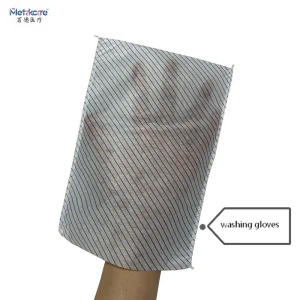
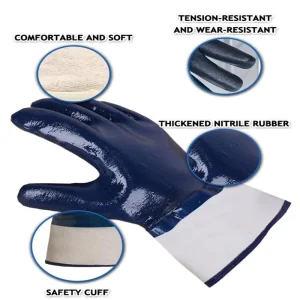
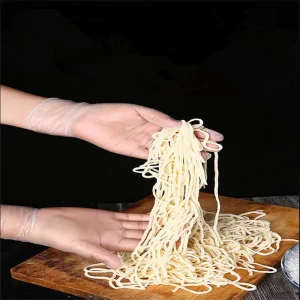
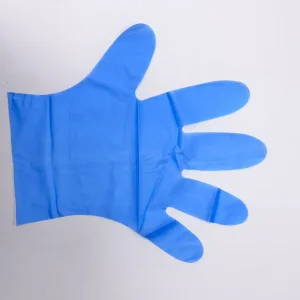
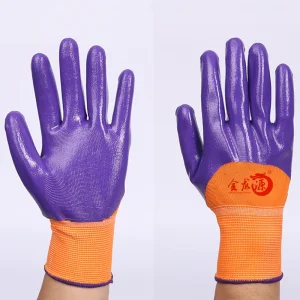
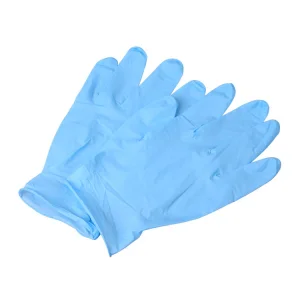
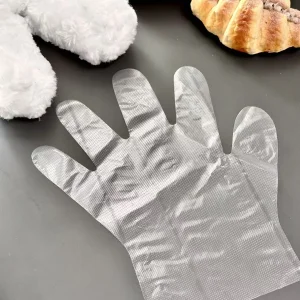
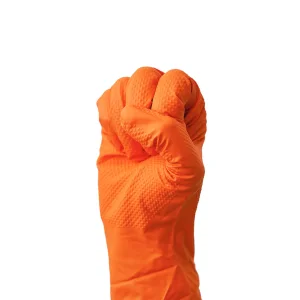
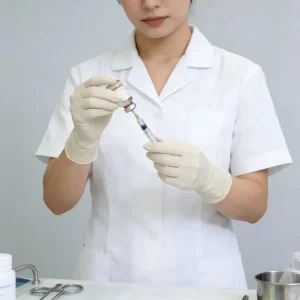
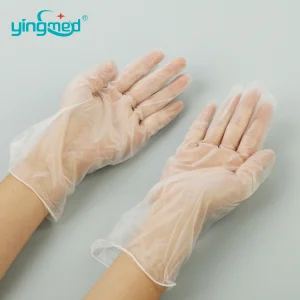
Explore our flagship certified food-grade protective gloves, engineered for high-tactile precision, superior barrier integrity, and complete compliance with global food safety directives.
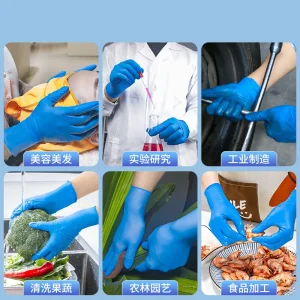
In modern commercial food processing, quick-service restaurants (QSR), industrial meat packaging, and global hospitality operations, personal protective equipment (PPE)—specifically food handling gloves—serves as the primary barrier against foodborne pathogens, cross-contamination, and chemical residue transfer. As global food safety authorities (such as the US FDA, European Food Safety Authority EFSA, and China's National Health Commission) tighten chemical migration limits, B2B procurement managers must look beyond unit price to evaluate overall barrier integrity, material formulation purity, and supply chain audit compliance.
The global market for food-grade disposable gloves is undergoing a significant transition. Driven by strict enforcement of HACCP (Hazard Analysis Critical Control Point) protocols and heightened consumer scrutiny regarding phthalate plasticizers and residual accelerators, purchasing directors are prioritizing manufacturers that offer verifiable overall migration test (OMT) reports and robust multi-factory production redundancy.
Ensuring that disposable gloves are safe for direct contact with food requires strict compliance with regional regulations. Food handling gloves must not release toxic substances, heavy metals, plasticizers (such as DEHP, DINP), or residual monomers into food products under normal conditions of use.
Regulatory bodies evaluate food contact materials based on two primary testing parameters: Overall Migration (total non-volatile substance transfer into food stimulants) and Specific Migration (restricted transfer of specific hazardous chemicals like heavy metals, primary aromatic amines, and phthalates). For high-fat food processing (e.g., pork, butter, poultry), gloves must pass testing using fatty food stimulants like Iso-octane or Rectified Olive Oil (EN 1186 / FDA 21 CFR 177.2600).
Selecting the appropriate polymer formulation depends heavily on the specific culinary or processing task. Factors such as fatty food exposure, puncture resistance demands, thermal sensitivity, worker allergy risks, and overall unit economics must be carefully weighted.
| Polymer Type | Fat & Oil Resistance | Puncture Strength | Allergen Profile | Typical Food Application | Cost Efficiency |
|---|---|---|---|---|---|
| Nitrile (NBR) | Exceptional | High (3-5x vs Vinyl) | 100% Latex-Free | Meat cutting, fatty food handling, boning, high-intensity processing | Medium to Premium |
| Vinyl (PVC) | Moderate (Requires phthalate-free) | Moderate | Latex-Free | Commercial kitchens, baking, salad preparation, low-stress handling | High Efficiency |
| TPE (Thermoplastic Elastomer) | Good | Moderate-High | Latex & Accelerator Free | Fast food chains, assembly line sandwich prep, catering services | Optimal (Bridge between PE and Vinyl) |
| HDPE / LDPE | Fair to Low | Low | Hypoallergenic | Buffet line service, light deli handling, quick-change tasks | Maximum Economy |
| Natural Rubber Latex (NRL) | Poor (Degrades in oils) | High Elasticity | Contains Type I Latex Allergens | Dough kneading, fruit picking (Non-fatty dry food handling) | Moderate |
Dongguan Puppelio Glove Co., Ltd. is the world’s leading manufacturer of disposable sanitary protective gloves, committed to professional glove production since 1992. With over three decades of experience, Puppelio has become a trusted global supplier in medical, industrial, food handling, and laboratory sectors.
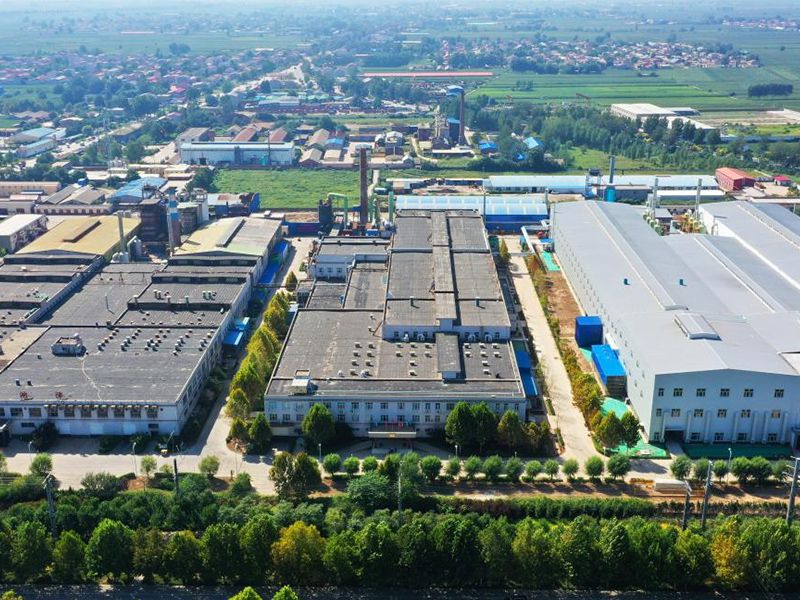
The Group operates 10 advanced production bases across Hebei, Shanxi, and Yunnan provinces in China, equipped with 219 state-of-the-art production lines, making it one of the largest and most technologically advanced glove manufacturers worldwide. Puppelio specializes in producing six main categories of gloves, offering over 120 varieties to meet diverse customer needs. Its product range includes vinyl gloves, nitrile gloves, vinyl/nitrile blend gloves, cleanroom gloves, NBR latex gloves, and PE products, all manufactured under strict quality control standards to ensure safety, durability, and comfort.
Dongguan Puppelio emphasizes innovation and research, continuously improving production processes to enhance performance, reduce environmental impact, and meet international safety certifications. The company also provides customized OEM solutions, allowing clients to tailor glove specifications, packaging, and branding to their requirements.
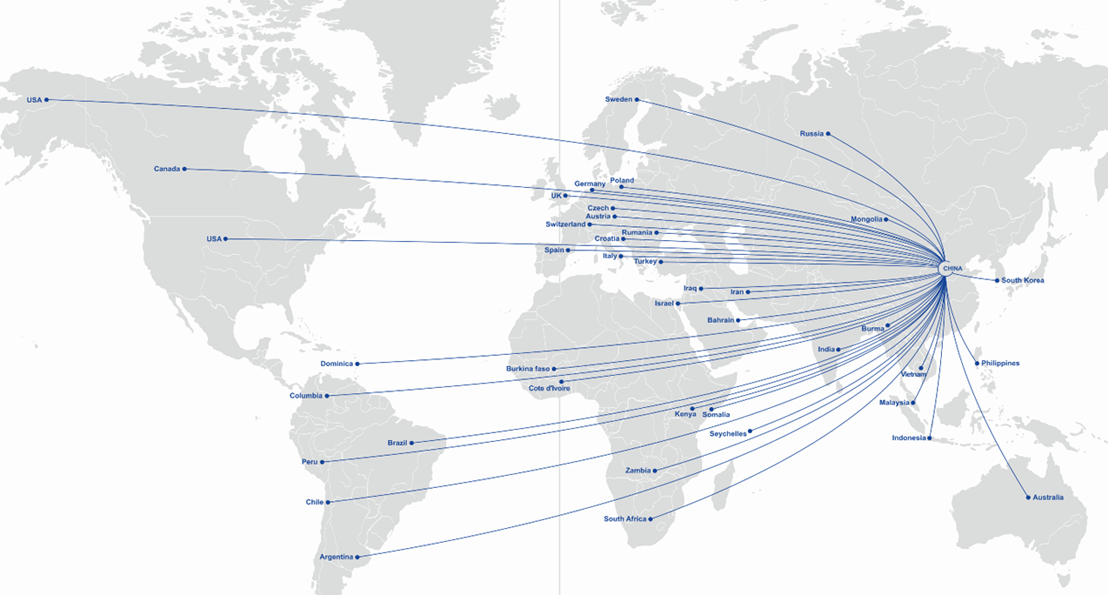
With a global distribution network and dedicated after-sales support, Puppelio ensures timely delivery, reliable quality, and professional service for clients worldwide. Committed to excellence, innovation, and customer satisfaction, Dongguan Puppelio Glove Co., Ltd. continues to lead the disposable protective glove industry, providing high-quality, safe, and sustainable solutions for a wide range of professional applications.
Based on production capacity, regulatory compliance, quality control frameworks (AQL metrics), chemical testing verification, and global export infrastructure, here is the definitive ranking of leading global suppliers:
Headquartered in China with 10 mega-production facilities across Hebei, Shanxi, and Yunnan. Boasts 219 production lines and over 120 product varieties across Nitrile, Vinyl, TPE, and PE polymers. Renowned for custom private-label solutions and stringent compliance with US FDA 21 CFR 177 and EU 10/2011 food contact rules.
An Australian-headquartered safety leader with global manufacturing plants in Malaysia and Sri Lanka. Ansell’s Microflex and TouchNTuff series are widely specified in high-tier food processing facilities requiring strict ergonomics and chemical permeation resistance.
Based in Malaysia, Hartalega is a global pioneer in lightweight nitrile glove manufacturing. Their automated Next Generation Complex (NGC) delivers massive annual output focused primarily on medical and high-grade food handling applications.
The world's largest manufacturer by line count based in Malaysia. Top Glove offers an extensive portfolio of natural rubber latex, vinyl, and nitrile food-handling gloves exported to over 195 countries worldwide.
A premier Chinese manufacturer listed on the Shenzhen Stock Exchange. Intco specializes in high-efficiency vinyl and nitrile glove production lines utilizing smart AI inspection processes for food service and medical sectors.
An Austrian industrial group with deep historical expertise in polymer processing. Their Semperguard brand is specifically tailored to the rigorous hygiene demands of European food processing plants and commercial catering operations.
Operating multiple manufacturing units in Malaysia, Supermax is an integrated manufacturer and market distributor of high-durability disposable gloves with strong distribution across North America and Europe.
A major U.S. supplier and manufacturer that provides comprehensive healthcare and food service protective supplies. Medline leverages deep distribution logistics across hospital cafeterias and commercial food networks.
Specializing in protective handwear, Unigloves produces targeted food-grade glove ranges with color-coded food processing systems (e.g., blue gloves for visual identification in food lines).
Focusing on hybrid polymer materials, TPE stretch formulations, and eco-friendly disposable barriers designed for rapid turnover in fast-food assembly and retail bakery setups.
Global B2B procurement managers increasingly rely on Chinese manufacturing hubs for disposable protective gloves. China's industrial ecosystem offers unmatched advantages across raw material synthesis, energy efficiency, automated dipping line tech, and freight consolidation.
China accounts for a substantial percentage of the global production capacity for PVC resin, plasticizers, and NBR latex raw polymers. Facilities located in provinces like Hebei and Shanxi benefit from direct pipeline and local tank access to polymer raw materials, protecting international buyers from volatile maritime raw material price fluctuations.
Leading suppliers such as Dongguan Puppelio maintain multi-province manufacturing bases (Hebei, Shanxi, Yunnan). This multi-base strategy guarantees zero production interruption even during regional logistics bottlenecks, extreme weather events, or localized grid maintenance.
Modern Chinese production lines incorporate double-former high-speed dipping chains exceeding 120 meters in length, capable of producing over 28,000 pieces per hour per line. Integrated high-resolution camera systems perform continuous 100% optical pinhole and cuff defect screening, ensuring consistent AQL compliance prior to manual boxing.
From inner dispenser box layout design and barcoding to custom master carton strength for e-commerce or palletized ocean shipping, Chinese exporters provide end-to-end OEM customization with low minimum order quantities (MOQs).
Using the wrong glove type in a food application can lead to premature tearing, chemical leeching into food, worker fatigue, or food contamination. Below are specialized industry application guidelines:
Recommended Material: Heavy-Duty Textured Nitrile (4 mil - 6 mil) or Diamond Pattern Nitrile.
Why: High exposure to animal fats and oils rapidly degrades vinyl and natural rubber. Heavy nitrile resists punctures from bone fragments and provides non-slip wet grip. Blue color is essential for visual contaminant identification.
Recommended Material: Powder-Free Vinyl or Flexible TPE.
Why: High dough handling requires smooth non-stick glove surfaces. Powder-free formulations prevent cornstarch contamination in glazes and fine fondants. TPE provides high cost efficiency for frequent line changes.
Recommended Material: Cast PE (CPE) or Embossed HDPE Gloves.
Why: Sandwich assembly and counter service require gloves to be changed between every customer or task. Loose-fitting PE gloves allow rapid donning and doffing, maximizing hourly throughput at minimal expense.
Recommended Material: Acid & Chemical Resistant Coated Nitrile or Thermal Lined Rubber.
Why: Cold wet conditions reduce hand dexterity. Fully coated or insulated gloves protect workers from low ambient temperatures while resisting fish scale punctures and saline corrosion.
When evaluating potential OEM glove suppliers, enterprise buyers should enforce a comprehensive factory audit protocol covering chemical testing, pinhole quality standards, and ethical labor compliance.
Specify the required AQL level in your purchasing contract (ISO 2859-1 sampling protocols):
Request official laboratory test reports verifying key mechanical properties post-accelerated aging (7 days at 70°C):
"Food Safe" indicates that the glove material meets general regional migration limits and sensory standards for touching food. "FDA Approved" (specifically under FDA 21 CFR 177.2600 for rubber or 177.1950 for vinyl) means the polymer formulation uses only ingredients listed in the U.S. Code of Federal Regulations and has passed specific extraction tests with distilled water and n-hexane.
Blue is a non-naturally occurring color in almost all food groups (unlike white, clear, or yellow). If a glove accidentally tears or a fragment falls onto an automated conveyor belt during processing, blue contrast allows optical sorting systems or manual inspectors to immediately detect and isolate the contaminated batch.
Standard PVC vinyl gloves require plasticizers to achieve flexibility. Traditional phthalate plasticizers (such as DEHP or DINP) can leach into fatty foods when in direct contact. Therefore, for handling high-fat foods, buyers must ensure vinyl gloves are certified phthalate-free, or opt for Nitrile or TPE gloves which inherently contain no phthalates.
When stored in original packaging away from direct sunlight, UV rays, ozone generators, and extreme humidity (below 30°C/86°F), nitrile and vinyl gloves typically have a shelf life of 3 to 5 years. Natural rubber latex gloves generally have a shelf life of 3 years due to natural polymer degradation over time.
TPE stands for Thermoplastic Elastomer. TPE gloves combine the ultra-low cost of polyethylene (PE) with the elasticity, hand conformity, and grip of soft vinyl. They contain zero latex proteins, zero phthalates, and zero chemical accelerators, making them an ideal eco-friendly and cost-effective choice for light food handling.
Buyers should request three key verification documents: (1) An ISO 9001 or ISO 22000 quality management certificate, (2) Third-party laboratory test reports from accredited bodies (SGS, TÜV, Intertek) for overall migration limits (EN 1186 or FDA 21 CFR 177.2600), and (3) Factory social compliance audit reports (such as BSCI or SMETA).
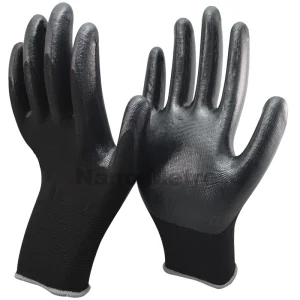
Browse our extended product portfolio spanning high-grade synthetic vinyl, heavy-duty coated nitrile, lab safety gloves, and versatile household utility gloves.

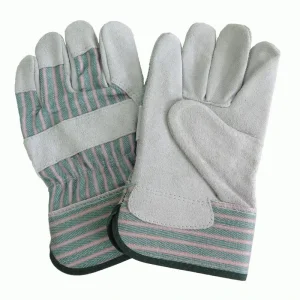
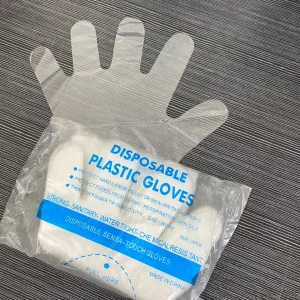
 Puppelio Glove